SUGAR GLIDE - BABY - MALE
SUGAR GLIDE - BABY - MALE
Out of stock
Questo prodotto non è disponibile per l'acquisto online
*** IN-STORE PICKUP ONLY!
Call for further questions
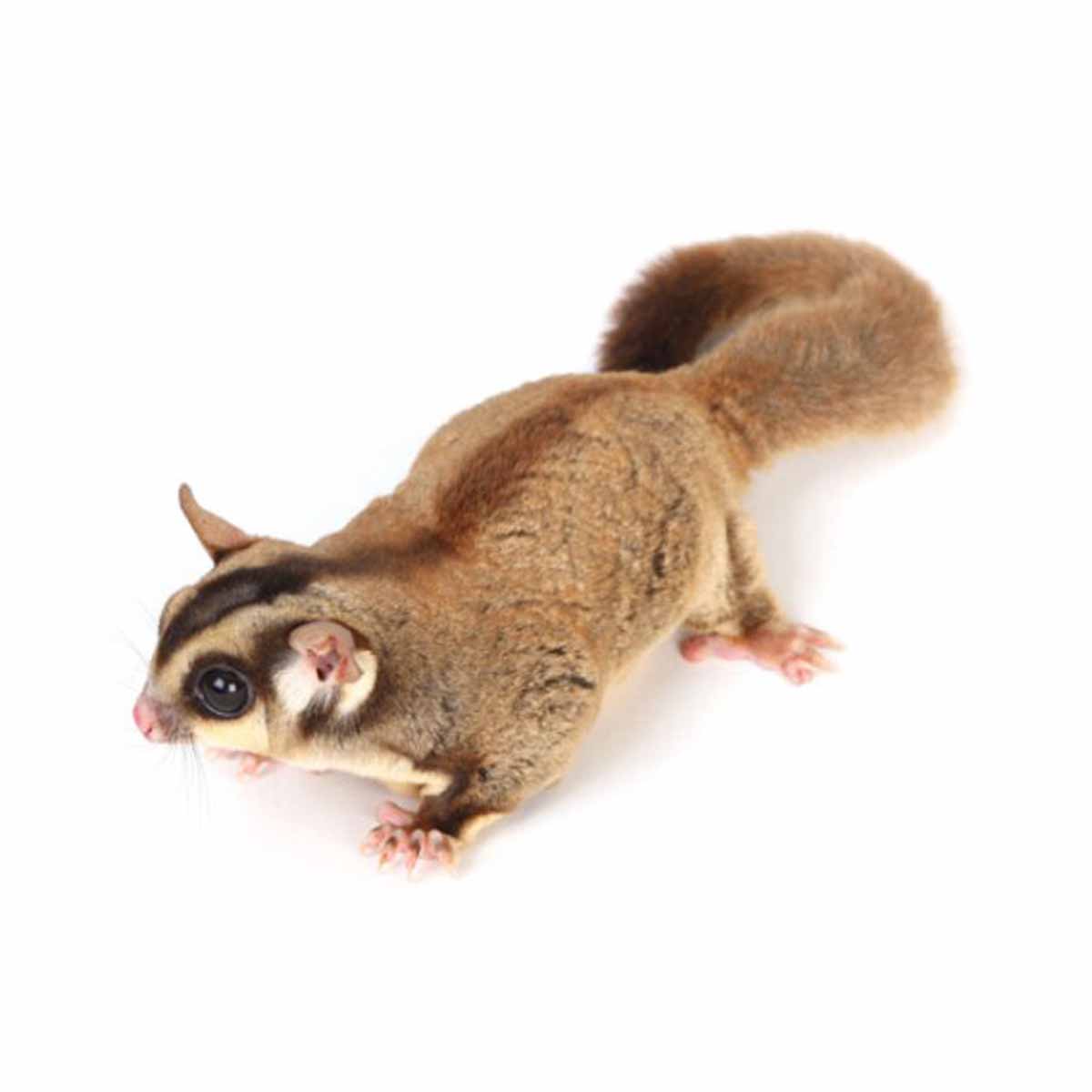
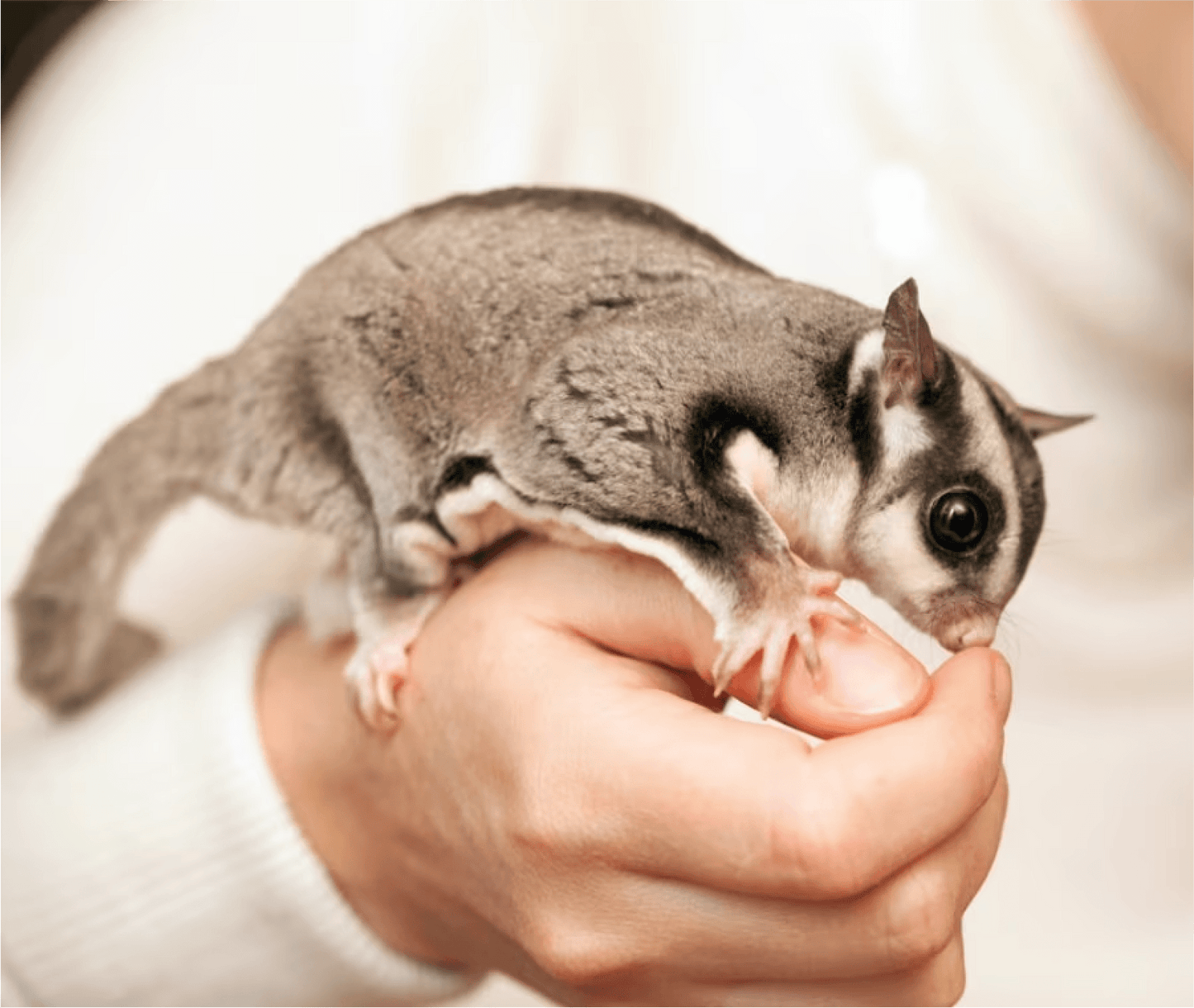
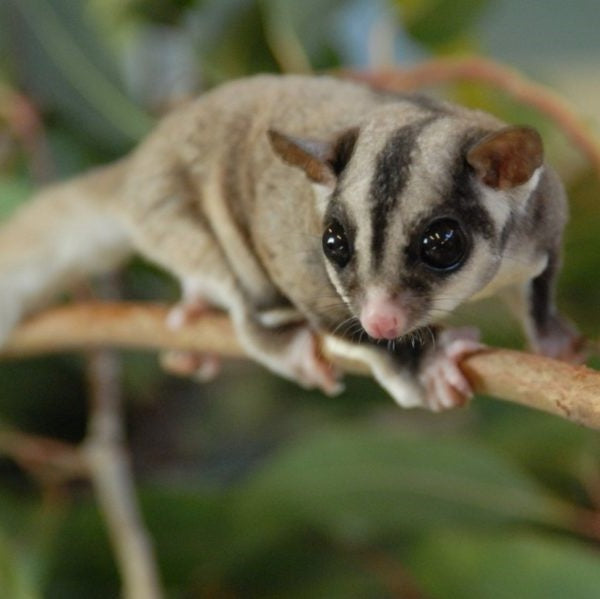
The sugar glider is a charming little animal with a cartoonish appearance, with large, bright, round eyes.
It is a small marsupial belonging to the opossum family, native to Australia and New Guinea. It is an arboreal animal, capable of gliding thanks to a membrane connecting its forelimbs to its hind limbs. Its tail is prehensile.
It is nocturnal and very active at dusk. The male is distinguished by the presence of a pendulous scrotum in front of the penis, as well as a clearly visible bald spot on its head.
The female has a pouch in which she holds her young. In the wild, males live an average of 4 years, and females 5, but when raised indoors, they can live up to 10-12 years.
If raised from a young age, it is also very docile, however, given the particularity of the species, it is not suitable for very young children, and is recommended more for adolescents or adults who are able to dedicate more effort to caring for the sugar glider.
The transport home and the first few days
When purchasing, some ethological considerations should be taken into account: in nature, sugar gliders live in mixed groups in which only the dominant male mates with the females; they also mark competing males with their urine.
Therefore, it is recommended to purchase a single male with the company of 2-3 females to form a family, to be housed in a cage with a base of 1x1 m and a height of at least 1.5 m.
It is not possible to keep a single subject who, prey to apathy, would waste away.
We will place the cage in a quiet place, without too much traffic, protected from cold drafts and away from radiators.
Gaining the trust of our new friends will be a gradual and patient process that will reward us with the satisfaction of being able to hold and raise such soft and exotic little animals.
Since they are crepuscular subjects, it is best not to stress them in full light but rather, after placing them in the cage once they arrive home, wait until the evening of the following days to approach them and tame them.
The main treatments
Sugar gliders need plenty of space to maintain their muscle tone. Provide their cage with branches they can climb and glide on, and a nesting box with a 5 cm diameter opening.
It's best to keep the temperature between 18 and 24°C as constant as possible, as they are susceptible to heatstroke and cold air. Sexual maturity occurs at 10-15 months of age; females go into heat in June-July, and gestation lasts 15-20 days. The pups are then housed in the pouch, emerging after 60-70 days.
Weaning will only be complete at the third month of life, therefore they cannot be separated from their mother before this time because they are not self-sufficient.
The power supply
In nature, sugar gliders feed on insects, leaves and buds of acacia and eucalyptus , flower nectar and honeydew, the sugary secretion of some insects.
At home we will feed them with various fruits such as melon , watermelon , figs, bananas, apples , apricots, pears, strawberries and oranges, as well as exotic fruits such as kiwi, mango and papaya.
For ease of access, we can purchase pre-packaged nectars at pet shops and give them to sugar gliders.
It may be useful to supplement with some eucalyptus leaves, collected by the sea and available from florists as long as you are sure that they have not been treated with pesticides!
During pregnancy and lactation, it is important to provide the mother with live insects such as crickets, honey beetles, and mealworms, dusting them with calcium carbonate beforehand.
General health regulations
Sugar gliders need a quiet environment, so it's not recommended to have lively dogs or cats in the same room as the cage.
Stress would manifest itself with alopecia and self-trauma of the tail.
Food that is too dry or exclusive can cause constipation, which can be remedied by giving fresh fruit rich in water or pineapple juice and pulp.
They do not require any special vaccinations.
Visits to the exotic animal veterinarian every 3-4 months can ensure your pet's nutritional status and muscle tone.
Source:
Dr. Marco Gentile
Veterinary Doctor
Register 1622 Turin
Share