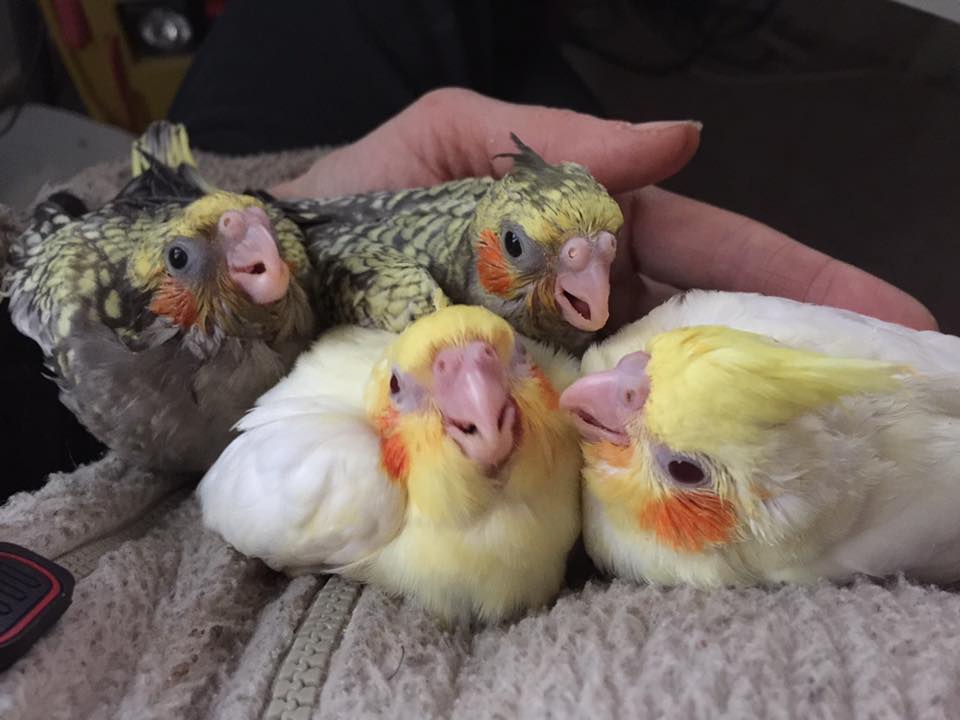
COCKATOOUS CHICKS
COCKATOOUS CHICKS
Out of stock
Questo prodotto non è disponibile per l'acquisto online
*** IN-STORE PICKUP ONLY!
Call for further questions
THE PARROT IS HAND-RAISED
The cockatiel or cockatiel is a bird of the Cacatuidae family.
It is the only species belonging to the genus Nymphicus.
Its size is between 30 and 32 cm and its weight ranges from 90 to 180 g, although there are exceptions, such as rickety specimens or oversized specimens as large as a ring-necked parakeet.
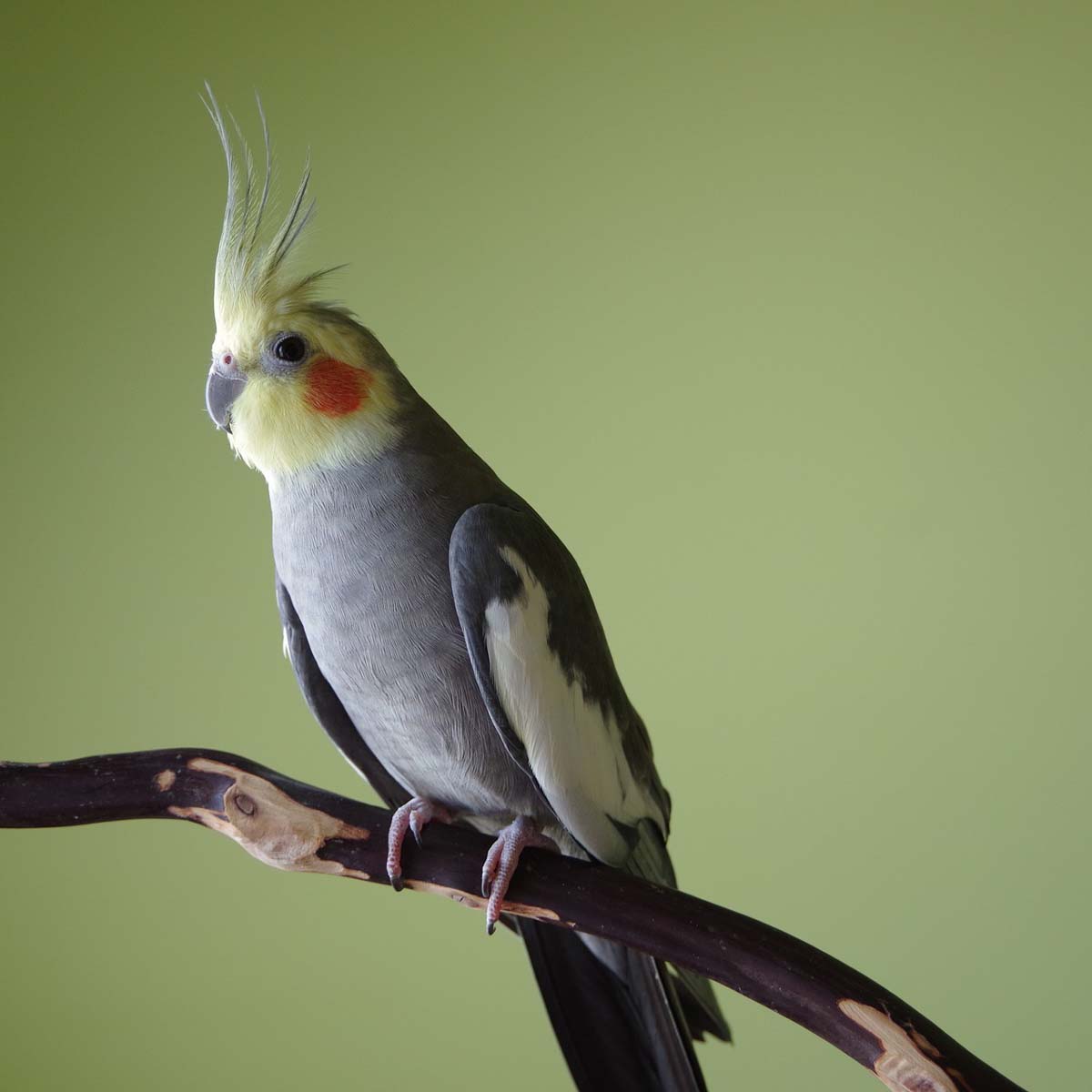
The body is elongated, with a long tail and the typical tuft on the forehead.
The crest is movable and indicates emotion. Cockatiels, like all psittaciformes, have zygodactyl feet (two toes pointing forward and two backward, for safe and easy climbing).
There are two beak variants: a classic one and a mutation where the upper beak is thinner and longer; they do not present major functional differences.
The ancestral is the only color that tends to dominate in nature, because it allows camouflage among the trees.
In this coloration the specimens tend to be of their original size and therefore always much larger than most mutations.
In the wild, however, compared to their captive cousins, cockatiels are much smaller; this is due to the limited food available compared to what they can find in an aviary.
The ancestral color is predominantly dark gray and brown, with the exception of the face and the yellow crest with the typical round red spot at the height of the cheek; wings with a clear white spot along the edge; the female can be distinguished from the male by the gray color also on the face and in the crest that emerges after the first molt at about 10 months of life, bars on the underwing and yellow bars on the undertail; therefore, it tends to dull the yellow and orange colors and become completely gray, while the male after the first molt strengthens the vividness of the colors.
The young subjects are therefore the same as the females but with the moult they change.
The colors are given by the presence and quantity of melanin (which gives the gray color) and by Calopsin (which gives the yellow or orange color).
There are other mutations where sexual dimorphism is less evident, although generally speaking, sexual dimorphism is characterized by the fact that the male sings, performing long songs, which, if hand-raised, can learn from his owner, along with some simple words. The female, on the other hand, whistles to attract attention or squeaks hoarsely, giving the impression of wanting to speak. The male begins to sing as early as two and a half months, but begins to learn from his owner from the third month.
Share